Pull out shelves for organizing kitchen cabinets

Here are some tips for organizing kitchen cabinets that will come in handy when decluttering your home and getting a fresh start.
Please don’t try to get this all done in one day. After you have decluttered your kitchen, you can start gradually shifting things about until you find the right organization for your cabinets – the one that works for you.
General Guidelines
Declutter before organizing – that means systematically rid yourself of everything that is broken, expired, or useless. I have a general rule of thumb in my house – if I or another family member hasn’t touched an object in a year, we no longer should be living with it.
Place items you use the most at eye level in a cabinet, or at hand’s reach in a top drawer.
When organizing kitchen cabinets, the place occasionally used items in out-of-reach places (high cabinets or in the back of deep cabinets).
Group objects together according to function.
Organize your cabinet space to support kitchen functions: food storage, equipment storage, food preparation, and clean up.
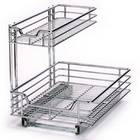
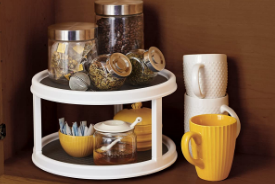
Invest in special shelves (rotating and pull out) to get full use of hard-to-access spaces in bottom cabinets.
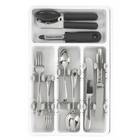
Use kitchen drawer organizers to keep things under control in these areas that have a tendency to get cluttered quickly. (It is so easy to throw something in a drawer and forget it, isn’t it?) Then equip yourself with some kitchen cabinet organizers that allow you to take full advantage of the space available in your cupboards.
Organizing Food Cabinets
- All food storage cabinets should be protected from excessive heat. Basically, this means don’t store food items above or next to the stove when organizing kitchen cabinets.
- Don’t store any food items under the sink, where things are likely to be damp.
- Many people like to keep open food in canisters. This is a nice touch, but not necessary if you close packages and use food items quickly. On the other hand, if months go by with opened products on your shelves, you should definitely be storing them in canisters to keep moths at bay and food fresh.

- Plastic baskets and boxes can really help tidy up your food cabinets. Placing small, but similar items together in a basket or box, makes cleaning kitchen cabinets and tracking food much easier.
- As much as possible, get rid of excess packaging before putting food away.
Here are a few categories to help you with organizing your food cabinets:
Dry goods. Pasta, couscous, rice, lentils, and beans. It is a good idea to have a separate shelf or a clear box for all dry goods that have been opened, so you can look there first before opening a new package.
Baking goods. Flours, sugars, baking powder, baking soda, and whatever else you use when baking.

Vegetables. Onions and potatoes should be kept loosely arranged in a basket on a dark shelf.
Spices and herbs. If you don’t have a spice rack organizer, a rotating shelf is indispensable for making these easy to access.
Snacks. These should be at eye level for easy access. Basically, I keep here whatever I don’t mind my kids helping themselves to. Reserve part of the cabinet for snacks that have been opened, and train everyone to first serve themselves these before opening a new package.
The off-limits cabinet. This is where you keep the goodies you’re saving for company, for a special occasion, or for a baking project. If your family is like mine, you will have to rotate this cabinet frequently or just tell everyone it’s the hands-off cabinet.
Bottled and canned goods. These can go on the bottom shelves. These items don’t risk contamination from crawling pests, so they’ll be fine near the floor.
Alcohol. If you have a wine collection, it of course deserves special attention. Here are a few tips on how to store wine. Otherwise, alcohol should be kept in a high cabinet away from small children.
Organizing Dish Cabinets
The glasses, plates, bowls, mugs, and silverware that you use every day should be stored as near to the dishwasher and sink area as possible. Consider which side of the dishwasher you will stand at when unloading, then store your most used dishes in that area.
Servingware should be grouped together, as well as any special occasion dishes you may have. The special occasion dishes are good candidates for those hard-to-reach cabinets.
Organizing Equipment Cabinets
When organizing kitchen cabinets, you will want to take into consideration your food preparation area. Hopefully, you have a well-designed kitchen triangle (the area designated by the refrigerator, stove, and sink) that includes a food preparation area that is easily accessed from each of these critical points. You will want to store any regularly used equipment near this food prep area.
Don’t make the mistake of storing equipment on the countertop. This quickly gets out of hand and pretty soon you have appliances you only use once a year cluttering up your work area (and getting grimy as well). The only appliances or tools that have a place on your countertop are the ones you use nearly every day. For me, this means a coffee maker, a hot water boiler, a toaster, a knife keeper, and a jug filled with cooking utensils.
Everyone cooks and works differently so there are no hard and fast rules about organizing kitchen cabinets and your equipment. When you are working in your kitchen, try to notice what items you use frequently and store these in the cabinets near your work area. Like items should of course be stored together so they are easy to find when you go looking.
Here are some groupings you may find useful:
|
|
Finally, store heavy items, including pots, skillets, and appliances, in lower cabinets. You don’t want a Dutch oven falling on your head.
Organizing Kitchen Cabinets – Sink Area

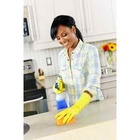
Don’t keep anything that will be harmed by water under the sink, for you just never know when a problem with the plumbing might crop up. Most people keep cleaning products under the sink, which is fine, but the cabinet must be child proofed in homes with wee ones. When my kids were little, I didn’t keep anything under the sink other than a bucket – one less thing to worry about.
If you are going to keep cleaning products there, you might like to invest in an organizer that is specially designed for this area.
You Might Also Like . . .